


1. SKIN ANALYSIS
A skin analysis is a consultation with a skin expert, during which your skin type and condition are analyzed. In most cases, a skincare routine is also prescribed based on this analysis.
The process
The analysis process may vary depending on where you have it performed. Some of the steps may include:
- In most cases, the skin analysis begins with a few questions and your face is cleansed to remove makeup, dirt, and residue.
- In bright light and using a magnifying lamp, or simply with the naked eye, your skin will be examined for key characteristics: do you have oily, dry, combination, or normal skin ? Or something in between?
- Besides your skin type, they can also analyze other skin characteristics such as elasticity, wrinkles, hydration level, transepidermal water loss, pigment spots, redness, irritation, and firmness. Tools, devices, and probes can be used to measure these skin parameters. Keep in mind that these are snapshot analyses , meaning they can vary throughout the day , the time of year, and your hormonal cycle. So, if you have your skin examined at the beginning of a cold day or at the end of a hot one, you'll get different results, which will affect the advice.
2. DNA SKIN ANALYSIS
In a DNA skin analysis , the foundation of your skin, your DNA is analyzed. By performing a DNA test , you can discover your "true" skin type , which is unaffected by surrounding, external factors. It essentially measures the skin parameters and risk factors you were born with . Genes that play a role in your skin health and skin aging are analyzed, such as those responsible for hydration, the skin barrier, collagen metabolism, antioxidant production, etc. Based on the presence of "mutations," variations, or "deviations," we determine your risk profile for accelerated aging, dry skin, redness, sensitivity, scarring, etc. By knowing your risk profile, you will understand the true origins of certain skin problems. For example, if you suffer from dry skin, we can see if you are genetically predisposed (more susceptible), or if it is due to certain external factors, such as the use of harsh soaps, exposure to air conditioning, or the winter weather.
Depending on the cause of your skin problem, you should treat your skin differently. A better understanding of your skin will therefore result in a better approach. And based on DNA analysis, ingredients can be selected that work very specifically to help offset your genetic risks.
Your DNA report serves as a kind of " personal guide" to all beauty products and also provides advice that goes beyond just skincare. Based on your DNA report, we can also offer certain lifestyle tips to help you counteract your genetic risks. For example, consider certain nutrients (with antioxidants you naturally lack) that can help counteract your genetic risk of skin aging.
Nomige DNA skin analysis: the process

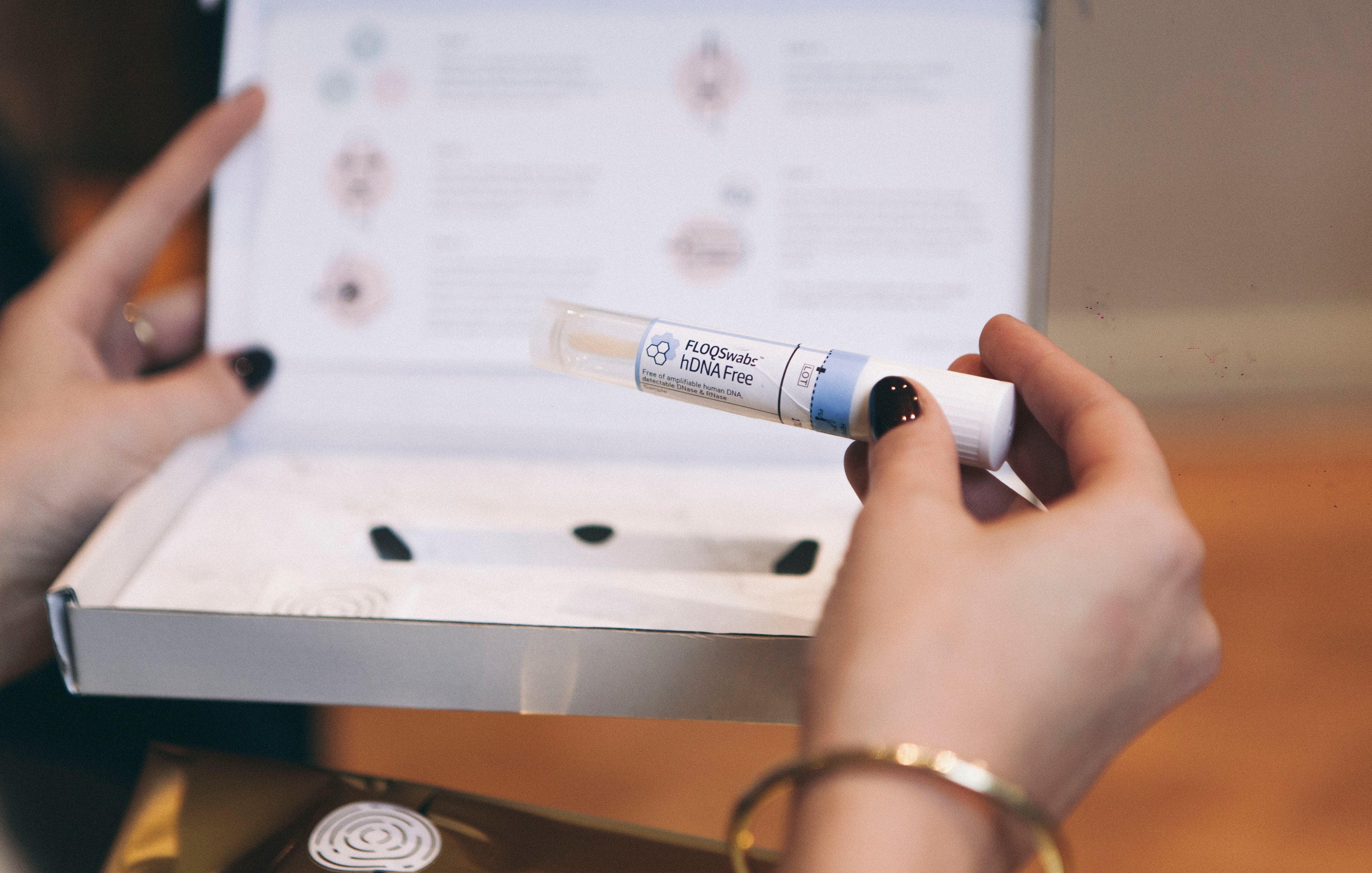
1. Take your DNA test using a saliva swab.

2. Your DNA will be analyzed in a certified laboratory.

3. You will receive a DNA report and a personalized skincare routine based on your DNA and lifestyle.

4. Personal follow-up and support
What is the difference between both analyses?
The biggest difference between a skin analysis as you know it and a DNA skin analysis is that a DNA analysis remains unchanged over time , while a "snapshot" skin analysis can vary from time to time. Once you've had a DNA skin analysis, you'll have this information and insights for the rest of your life. It's your "inherent" skin type.
Furthermore, a DNA skin analysis can easily be performed remotely , while this isn't possible for other skin analyses. A DNA test is mailed to you, you collect a saliva sample at home, and return it by mail. After your sample is analyzed, your skin DNA report and the products are mailed to you. This way, you can collaborate with the best partners, even if they may not be nearby.
Because your DNA doesn't change over time—you're born with it—you only need to have a DNA skin analysis once. It's a one-time expense . External and lifestyle factors do change over time and will influence how your DNA behaves, regardless of whether certain genes are activated or not. Therefore, we highly recommend having both types of skin analysis to gain the best insights and thus the most personalized approach.

